
Burner Email vs Regular Email: Which One Should You Use in 2026?
Compare burner emails and regular emails. Learn the key differences, when to use each, and how temporary addresses can complement your primary inbox.
Burner Email vs Regular Email: Which One Should You Use in 2026?
Not every situation calls for the same type of email address. Sometimes you need the permanence and credibility of a traditional inbox. Other times, you need the speed and anonymity of a temporary solution. Understanding when to use each can protect your privacy while keeping your digital life organized.
What Makes Them Different?
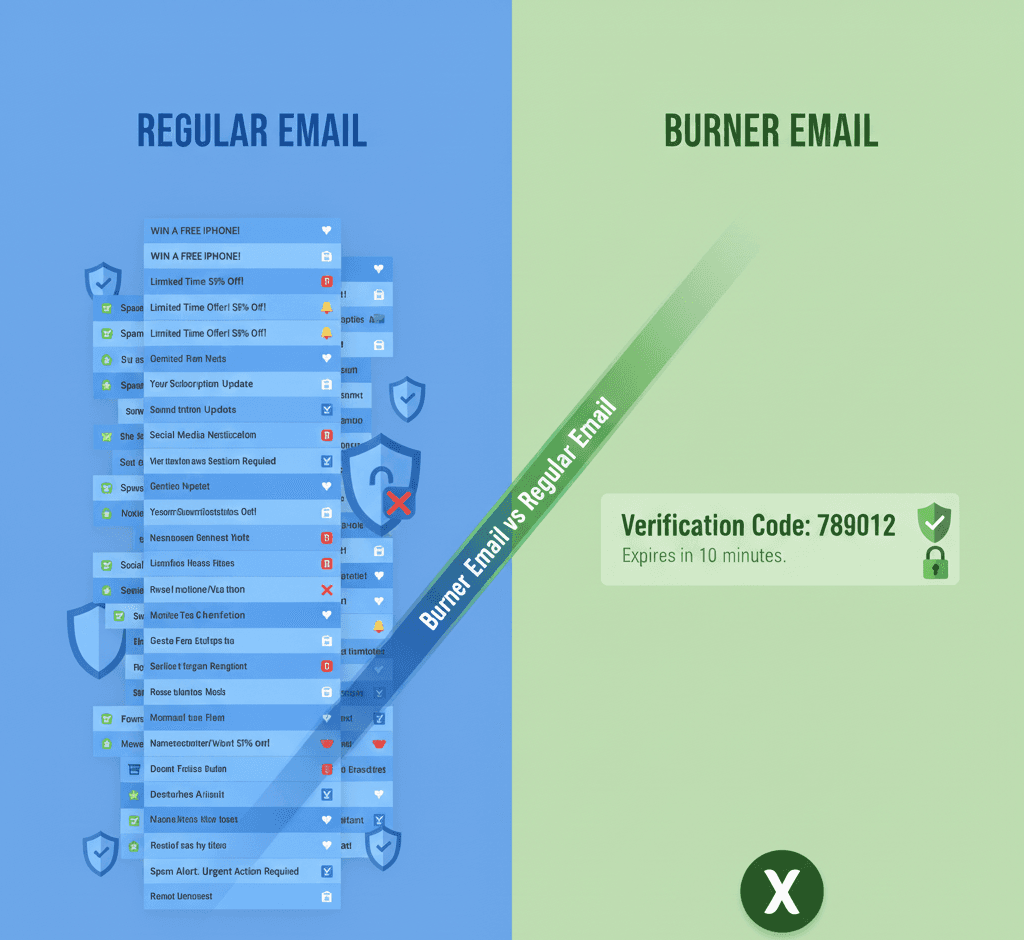
The core difference between a burner email and a regular email comes down to three factors: longevity, identity, and purpose.
Regular Email (Gmail, Outlook, Yahoo)
A traditional email account is designed for long-term use. You create it once, verify your identity with a phone number or recovery email, and use it for years. Your regular inbox becomes the central hub for banking alerts, work correspondence, family photos, and subscription receipts.
Key Characteristics:
- Requires personal information during signup
- Permanent storage of emails
- Tied to your real identity
- Built for two-way communication
- Offers customer support and account recovery
Burner Email (Xeramail, Temp Mail Services)
A temporary email exists for a specific task and then disappears. There's no signup process, no password to remember, and no connection to your real name. You generate an address in seconds, use it to receive a verification code or download link, and then move on.
Key Characteristics:
- No registration required
- Self-destructs after a set time period
- Completely anonymous
- Designed for receiving messages
- No account recovery needed
Side-by-Side Comparison
| Feature | Regular Email | Burner Email |
|---|---|---|
| Setup Time | 5-10 minutes | Instant |
| Personal Info Required | Yes (phone, name) | No |
| Storage Limit | 15GB+ | Temporary only |
| Lifespan | Permanent | Minutes to hours |
| Spam Risk | High (if leaked) | Zero (disposable) |
| Account Recovery | Available | Not needed |
| Best For | Important accounts | One-time signups |
When to Use a Regular Email
Your primary email should be reserved for situations where trust, longevity, and accountability matter.
Professional Communication
Work emails, client correspondence, and networking require a stable address. Sending a job application from "randomstring123@temp.com" won't inspire confidence.
Financial Services
Banks, investment platforms, and payment processors need a permanent way to contact you. Tax documents, fraud alerts, and account statements require a reliable inbox.
Personal Relationships
Family, friends, and long-term communities expect consistency. You can't maintain relationships if your contact information changes every week.
Account Recovery
If you get locked out of an important account, recovery emails need to go somewhere permanent. Losing access to your primary email can create a domino effect across your digital life.
When to Use a Burner Email
Temporary addresses shine in situations where convenience matters more than permanence.
E-commerce One-Time Purchases
Buying from a small online store you'll never visit again? A burner email prevents that retailer from adding you to their newsletter or selling your address to marketing partners.
Free Trial Explorations
Software trials, streaming service tests, and demo accounts often require an email but don't need ongoing communication. Use a temporary address to evaluate the product without committing your real contact info.
Content Downloads
White papers, e-books, and gated content frequently hide behind email collection forms. A burner lets you access the material without joining another mailing list.
Forum and Community Registration
Participating in niche forums or discussion boards doesn't require revealing your permanent identity. A temporary address lets you contribute while maintaining separation from your main digital presence.
Public Wi-Fi Login Screens
Airports, hotels, and coffee shops often demand an email before granting internet access. These captive portals don't need your real address.
The Hybrid Strategy: Using Both Together
The smartest approach isn't choosing one over the other. Instead, treat your regular email and burner emails as complementary tools.
Create a Three-Tier System:
- Primary Email: Banking, work, government services, and close personal contacts
- Secondary Email: Online shopping, subscriptions you actually want, and semi-important accounts
- Burner Emails: Everything else (trials, downloads, one-time signups, public interactions)
This strategy keeps your most important inbox clean while still allowing you to interact freely across the internet.
Common Misconceptions About Burner Emails
"Burner Emails Are Only For Hiding Something"
Privacy isn't about secrecy. It's about control. Using a temporary address for a newsletter signup doesn't mean you're doing anything wrong. It means you're choosing not to hand over more data than necessary.
"You Can't Receive Important Messages on Burner Emails"
You absolutely can. Verification codes, download links, and confirmation receipts all work perfectly with temporary addresses. The difference is these messages don't need to exist forever.
Security Considerations
Both types of email have different security profiles.
Regular Email Risks:
- Targeted phishing attacks using your name
- Account takeover attempts
- Data breach exposure across multiple sites
- Long-term spam accumulation
Burner Email Risks:
- Cannot recover lost information after expiration
- Some services block known temporary domains
- Limited functionality for sending emails
- Potential lack of encryption on less reputable providers
Choose Xeramail for temporary addresses because we prioritize encryption.
Making the Right Choice
Ask yourself these questions before entering an email address:
- Will I need to access this account in six months?
- Does this service handle sensitive personal or financial data?
- Do I want ongoing communication from this sender?
- Would I be upset if I couldn't recover this account?
If you answered "yes" to any of these, use your regular email. If you answered "no" to all of them, a burner email is the smarter choice.
Take Control of Your Inbox Strategy
You don't need to choose between privacy and functionality. Regular emails and burner emails serve different purposes, and using both strategically gives you the best of both worlds.
Generate your first burner email at Xeramail.com and experience the freedom of anonymous, instant temporary inboxes.
Frequently Asked Questions
Can I use a burner email for Amazon or eBay?
You can, but it's not recommended for the main account. Use your regular email for the account itself, then create burner emails for individual seller communications or one-time purchases from marketplace vendors.
What happens if I forget to check my burner email before it expires?
With Xeramail, your inbox remains active as long as the browser tab stays open. For time-sensitive verification codes, keep the tab open until you complete the signup process.
Can I convert a burner email into a permanent one?
No, that defeats the purpose. If you realize you need permanent access, use your regular email to update the account contact information before the temporary address expires.